
20+ let zkušeností v implantologii
Specializovaná zubní ordinace London
Nejlepší ceny zubních implantátů
Certifikovaný zubní lékař pro zavedení implantátů
What is a dental implant?
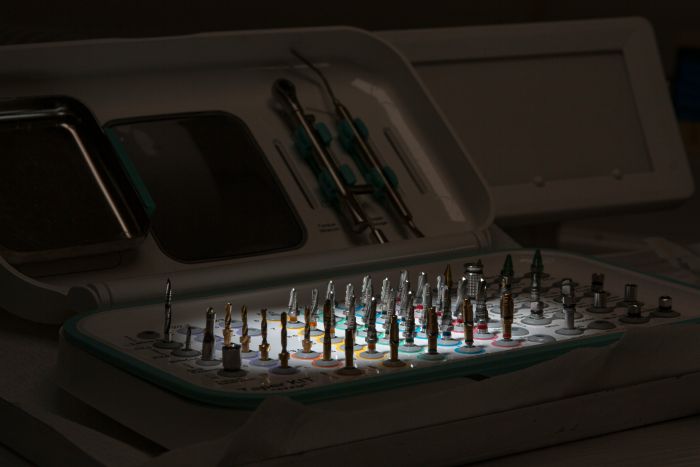
A dental implant is a modern replacement for a missing tooth, including its root. It is a small screw-shaped cylinder that is inserted into the jawbone and serves as a solid foundation for a crown, bridge or denture.
Implants are most often made of titanium , which is biocompatible and allows a strong connection with the bone. For higher aesthetic demands or allergy sufferers, there are also metal-free white zirconium implants.
Thanks to implants, you can achieve a natural appearance and functionality without the need to grind down neighboring healthy teeth, as is the case with traditional bridges.
Dental implant price
Dental Implants London price
The price of dental implants varies depending on the material used, the type of implant, and other factors. We will be happy to provide you with the exact price during your consultation .
The final price may vary depending on a number of factors that affect the overall complexity and scope of the treatment, including:
The type of implant chosen
titanium or zirconium
Amount of bone tissue needed
and possible augmentation
Type and material
Final crowns
Implant brands and lines
(Straumann, Neodent)
Gum condition
and soft tissue treatment needs
Necessities
previous tooth extraction
Use
guided implantation
Treatment needs
surrounding teeth
Overall difficulty
surgical procedure
Book a consultation
Why choose dental implants?
Dental implants are the most modern and effective solution for replacing missing teeth. Unlike classic bridges or removable dentures, they provide maximum stability, a natural appearance and long life.
Main benefits and reasons to choose dental implants:
- Natural appearance and function – implants look and function like real teeth, providing a natural look and feel.
- Jawbone protection – they stimulate bone and prevent bone loss that can occur after tooth loss.
- Comfort and stability – unlike dentures, implants do not move or fall out, ensuring stability and comfort.
- Longevity – with proper care, implants can last a lifetime, making them a long-term investment.
No damage to surrounding teeth – when placing implants, there is no need to grind adjacent healthy teeth, which is necessary with bridges.
How long does the implantation process take and how does it work?
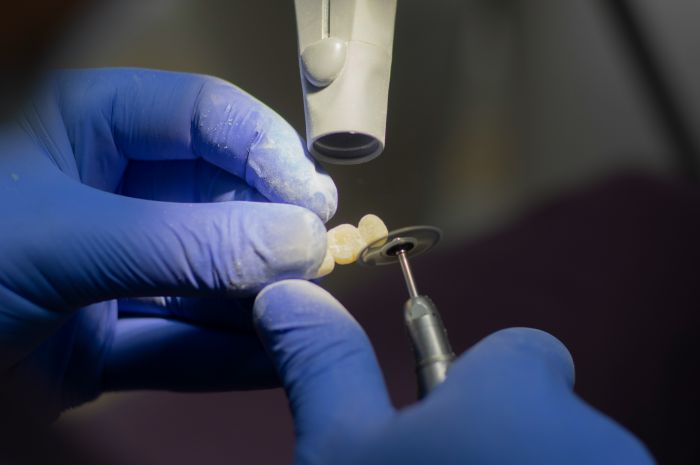
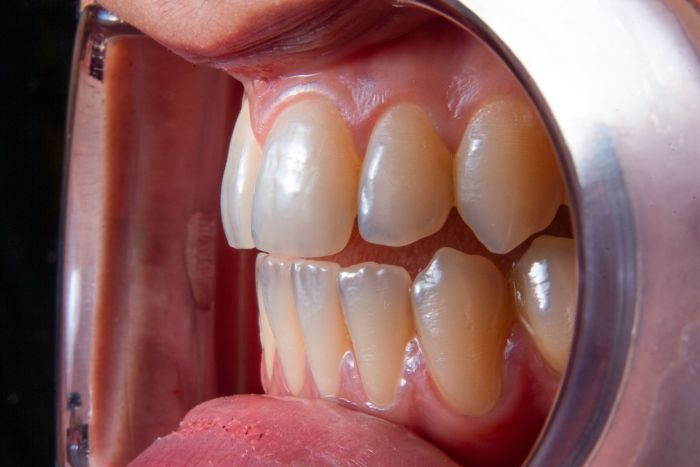
The entire process of dental implant placement involves several stages and can take several months. It all depends on individual circumstances.
Consultation and planning
The dentist will perform a thorough examination, including a 3D scan of the jaw, and propose the optimal solution.
The implantation itself
implantát se zavádí chirurgicky do čelistní kosti v lokální anestezii. Zákrok je bezbolestný a trvá obvykle 30–60 minut.
Healing and fusion with bone (osseointegration)
trvá přibližně 2–6 měsíců, během nichž se implantát pevně spojí s kostí.
Connection of the so-called abutment and impression for the prosthetic replacement
After successful osseointegration, the connecting part is attached to the implant and an impression is made for the production of a crown, bridge or prosthesis.
Placement of the definitive restoration
An individually made crown or bridge is attached to the implant, completing the tooth replacement.
When are dental implants used?
Dental implants can be used in various situations:
- Replacing one tooth – the implant replaces the root of the tooth and a crown is attached to it.
- Replacing multiple teeth – several implants can serve as support for a bridge.
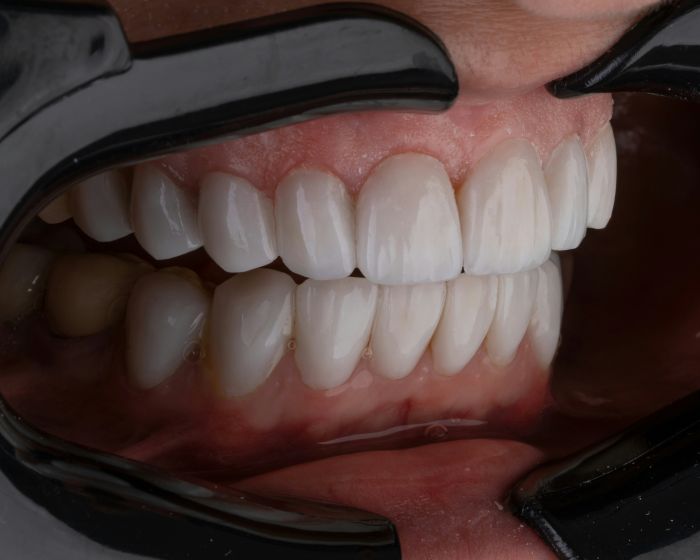
- Replacement of the entire jaw – methods such as All-on-4 or All-on-6 allow the fixation of the entire denture on several implants, thus avoiding removable dentures.

All-on-4 and All-on-6
Methods for replacing the entire dental arch with a fixed bridge on 4 or 6 implants.
- All-on-4 – Four implants (two in front, two angled in back) support the entire dental arch. Less invasive procedure with shorter recovery time. Suitable for patients with sufficient bone structure.
- All-on-6 – Six implants provide stronger and more stable support. Suitable for patients with greater bone loss or higher demands for stability and functionality. More even load distribution.
Advantages of both methods:
- Faster results – A new dental arch in a relatively short time.
- Stability and functionality – A solid replacement that functions like your own teeth for trouble-free eating and speaking.
- Bone preservation – Implants stimulate the jawbone and maintain oral health.
Both methods are an effective and permanent solution for patients looking for an alternative to traditional dentures.
Who are dental implants suitable for?
Dental implants are the ideal solution for anyone who:
ztratil jeden nebo více zubů
And he wants a good-looking and functional replacement.
wants a stable and aesthetic replacement instead of a removable prosthesis
Because the solution using a prosthesis may not suit many people.
has sufficient quality bone for implant placement
And if he doesn't have it, he is willing to discuss the possibilities of bone augmentation.
looking for a long-term and functional solution for tooth replacement
Because he may have been burned by other options in the past.
Implant types and materials
Dental implants vary in material and design. The most commonly used are:
Titanium implant
the most common type that is highly biocompatible and strong.
Zirconium implants
aesthetic and metal-free alternative, ideal for patients with allergies or higher aesthetic requirements.
How to choose a suitable implant and implantation site?
Choosing the right implant depends on several factors:
Jawbone quantity and quality – sufficient healthy bone is key to successful implant integration.
Location of the missing tooth – zirconium implants are often chosen in aesthetically exposed areas (front teeth).
The patient’s overall health – diabetes, osteoporosis or smoking can affect implant healing.
Type of dental prosthesis – the patient’s individual requirements determine whether a single implant, bridge, or complete denture will be used.
Dental implant brands
We work with proven brands Straumann and Neodent, which are recognized worldwide for their quality and high success rate.
Straumann is a Swiss leader in implantology with a long history and the highest standards. Neodent is a Brazilian brand established on the international market thanks to its reliability and affordability. Both companies ensure optimal results and long-term stability.

Types and methods of dental implantation
We distinguish two types depending on the time between extraction and implant insertion:
Immediate implantation – the implant is placed immediately after tooth extraction. It shortens healing time and minimizes jawbone loss because the implant immediately stimulates the bone and prevents its loss.
Delayed implantation – the implant is inserted only after the bone has fully healed (3–6 months). Suitable for more extensive bone loss or the presence of infection. Waiting for bone stabilization ensures better conditions for successful implantation.
Depending on the method of insertion, we distinguish between guided and classic implantation.
Navigated implantation uses computer-controlled technology and 3D scans for maximum precision in implant placement. It minimizes risks, spares surrounding tissue and ensures higher success rates. The entire process is faster and safer, which is especially advantageous in complicated cases.
Classic implantation is performed without computer navigation – the doctor relies on his own experience and visual assessment. This procedure can be less precise and more demanding in more complex cases.
Postoperative care and recovery period
After implantation, proper care is key to successful healing. Mild swelling and tenderness are common and usually subside within a few days. We recommend pain medication, icing the operated area for the first 24 hours, and rest, avoiding strenuous physical activity.
For the first few days, eat soft, cool foods and maintain careful oral hygiene – use a mouthwash recommended by your doctor. In the case of larger implants, recovery may take several weeks. Regular check-ups with your dentist are essential.
When implants are not recommended
Dental implants are not suitable for everyone. The main contraindications include:
- Bone deficiency – Weak or narrowed jawbone may require augmentation before implantation.
- Health problems – Uncontrolled diabetes, osteoporosis, immunodeficiency, or heart disease with blood thinning medications increase the risk of complications.
- Smoking – Significantly increases the risk of infection and slows healing.
- Material allergies – Rarely, there may be a problem with titanium allergies; zirconium is an alternative.
- Younger age – Implantation is not recommended under 18–20 years of age, while the jawbone is in the growth phase.
Is implantation risky?
Dental implantation is a safe procedure with a high success rate of around 95-98%. The risks are minimal, but may include:
- infection at the implantation site,
- insufficient fusion of the implant with the bone,
- damage to the nerve or adjacent structures.
Risks can be minimized with thorough planning, an experienced professional, and careful postoperative care.

Maintenance and care of dental implants
Regular care is important for the long life of implants:
- Regular oral hygiene – Clean implants with a soft toothbrush and toothpaste, use dental floss or interdental brushes.
- Dental checkups – Visit your dentist every 6 months for a professional cleaning and check on the condition of your implants.
- Infection Prevention – Protect surrounding tissues from inflammation (peri-implantitis) with proper cleaning techniques. If you experience any signs of inflammation, see your doctor immediately.
With proper care, implants can last for many years, or even a lifetime.
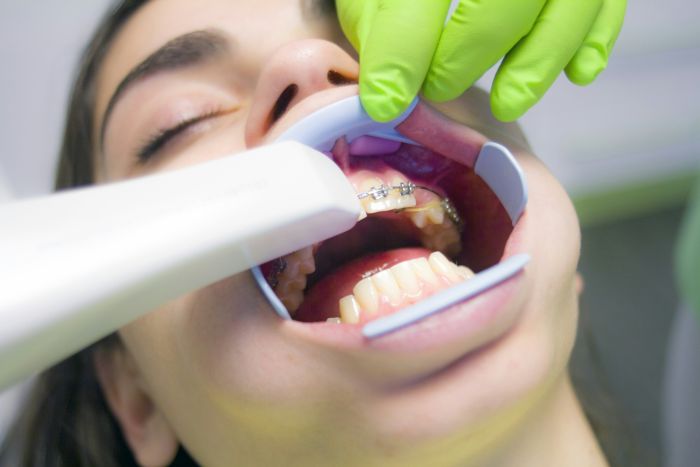
Get a new smile with implants in the London
Arrange a consultatioN
We will help you find the ideal solution for replacing missing teeth.
Let's discuss it!
Frequently asked questions
What do people ask most often about dental implants?
All-on-X involves the placement of 4, 6 or more implants in the jaw. If there is a lack of bone in the jaw, augmentation is performed – adding bone mass for stable anchoring of the implants. After the implants are placed, a temporary fixed prosthesis is attached, and the final teeth are placed only after healing.
Dental implantation is performed under local anesthesia and involves surgically inserting an implant into the jawbone. Before the procedure, the doctor will assess the condition of the bone and, in case of a lack of bone mass, may perform augmentation – adding or strengthening the bone to provide a firm support for the implant. After the implant is inserted, there is a healing period during which it fuses with the bone, and only then is a crown or other replacement prepared.
Immediately after implantation, rest, gentle oral hygiene and a soft diet are important. In the long term, it is necessary to clean the implants with interdental brushes, use a mouthwash and go for regular check-ups and dental hygiene.
Yes, in some cases, so-called immediate loading of the implant is possible – the patient leaves with a temporary fixed prosthesis on the same day. The suitability of this method will be assessed by the doctor based on the quality of the bone and the overall condition of the oral cavity.
The price depends on the number of implants, the type of restoration and the necessary additional procedures (e.g. augmentation, extraction, CBCT scans). We always prepare an individual treatment plan with a detailed price calculation in advance.
In this case, your doctor will recommend bone augmentation . This surgical procedure restores or increases the volume of bone tissue using your own bone or a replacement material. After healing, an implant can be safely inserted.
With traditional implants, each tooth is replaced individually, while the All-on-4 or All-on-6 method uses a smaller number of implants to secure the entire row of teeth. This makes it gentler, faster, and more cost-effective.
This is a modern technique for total dental reconstruction, where the entire denture is attached to 4, 6 or more implants. The method allows for fixed (non-removable) teeth even in patients who previously wore dentures. The advantage is quick implementation and a natural appearance.
A dental implant is a titanium screw that replaces the root of a missing tooth. After it has fused with the bone, a crown, bridge, or complete denture can be attached to it. The implant functions just like your own tooth and restores chewing comfort and the aesthetics of your smile over the long term.
In normal cases, the crown is placed after 2-5 months. In some patients, it is possible to use the immediate loading method, where the temporary crown is placed immediately after implantation.